

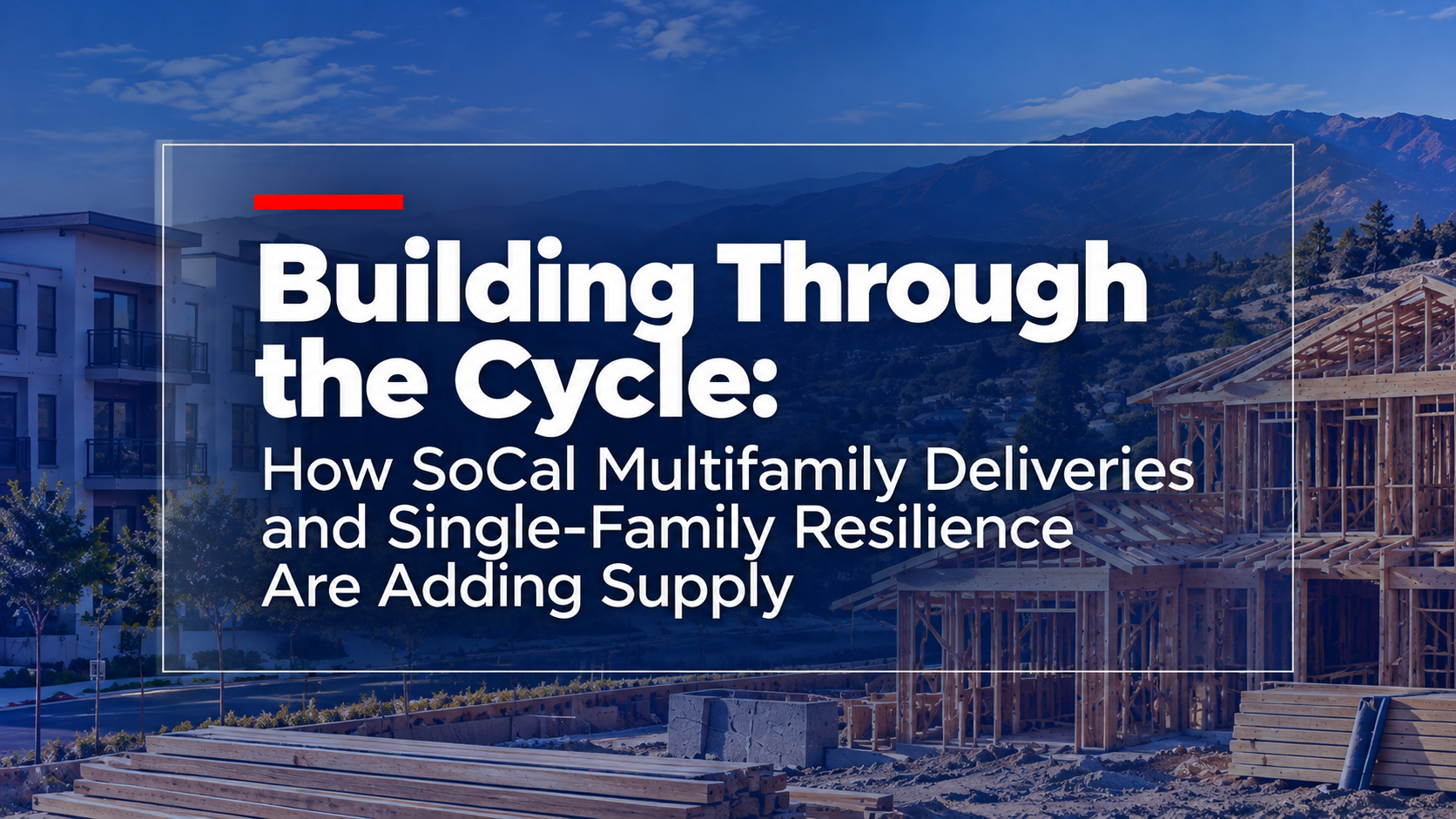
Building Through the Cycle: How SoCal Multifamily Deliveries and Single-Family Resilience Are Adding Supply
Southern California’s residential construction market continues to show resilience in 2026, even as housing development slows in other parts of the country.
While national multifamily deliveries are expected to decline from recent highs, Southern California is maintaining a relatively steady pace of apartment completions. At the same time, single-family communities and accessory dwelling units (ADUs) continue to contribute to the region’s housing supply.
For builders and trade contractors, these trends highlight the importance of maintaining a diverse residential construction pipeline.
Southern California Multifamily Construction Maintains Momentum
While many U.S. markets are experiencing a slowdown in multifamily development, Southern California continues to see new apartment communities reach completion.
According to Northmarq’s first-quarter 2026 multifamily research, most Southern California markets were expected to maintain steady delivery levels throughout the year, following approximately 21,600 completed units in 2025.
Los Angeles remains a major contributor to regional housing production, while Orange County, San Diego, and the Inland Empire continue to see residential development activity.
Demand has also helped support the market. Northmarq reported a regional multifamily vacancy rate of approximately 4.6% during the first quarter of 2026, suggesting that new deliveries are entering a market with an established base of rental demand.
These projects are adding housing options while supporting the continued development of communities throughout Southern California.
Single-Family Construction and ADUs Add to Housing Supply
Multifamily development is only one part of the region’s housing growth.
Single-family construction continues to provide opportunities for builders, particularly in suburban markets where new communities are being developed. Detached homes, paired homes, and townhomes offer different housing options while allowing builders to respond to local demand and available land.
ADUs are also playing a growing role in California’s housing inventory.
According to the California Department of Finance’s 2026 housing estimates, nearly 17,700 ADUs were added statewide in 2025, accounting for approximately 15.2% of new housing units.
Together, these different housing types demonstrate how residential construction can continue contributing to supply, even as affordability concerns, financing conditions, and development costs remain challenges.
Supporting Residential Construction Through Coordination
Whether a project involves a multifamily development or a new single-family neighborhood, successful construction requires careful planning and coordination.
Builders must manage material availability, scheduling, inspections, and multiple trades while keeping projects moving through different phases of construction.
At 20/20 Plumbing & Heating, our teams support both single-family and multifamily residential construction throughout Southern California and Nevada.
From early coordination and material planning to plumbing and HVAC installation, our teams understand the importance of maintaining consistent production, communicating with builder partners, and adapting to changing jobsite conditions.
As a 100% employee-owned company, we’re proud of the experience and commitment our employees bring to every project.
Looking Ahead
Southern California’s housing market continues to face challenges, but ongoing multifamily deliveries, single-family construction, and ADU development demonstrate that residential production remains active across the region.
Each housing type contributes to long-term supply, creating opportunities for builders and trade partners to support the communities taking shape throughout Southern California.
At 20/20 Plumbing & Heating, we’re proud to be part of that continued growth, delivering the coordination, experience, and quality work our builder partners depend on.
0 comments
Write a comment